In React State management is one of the most architectural decisions. When the React applications grows, it requires a centralized solution for managing state data. However, react provides us built-in hooks which handles only the local component state it does not handle global state of the application.
Redux was considered the best choice for the state handling but now new libraries like zustand is modern approach to handle the state efficiently because it is lightweight and simple approach.
In this guide we’ll compare Redux vs Zustand across performance, developer experience , scalability and real world use case with examples to help you make the right decision.
Table of Contents
1. What Is Redux?
2. What Is Zustand?
3. Why Developers Compare Redux vs Zustand in 2026
4. Redux vs Zustand Comparison Table
5. When Should You Use Redux?
6. When Should You Use Zustand?
7. Frequently Asked Questions
8. Conclusion
What Is Redux?
Redux is a state management library that provides a centralized store for handling the state. Modern react applications uses the redux using the Redux Toolkit. Redux toolkit is lightweight configuration and reduce the boilerplate code for developers.
Redux follows core component that includes:
- Actions
- Store
- Reducers
- Dispatch
Common Redux Use Cases
- Enterprise large scale applications
- E-commerce applications
- Banking dashboards applications
- Applications with complex logic
What Is Zustand?
Zustand is lightweight state management library which handle the global state of the applications in simple and intuitive manner.
Unlike Redux, Zustand doesn’t require any actions, reducers, dispatch function.
We can create store with minimal setup and directly use inside the components so it makes easy for developers to integrate the zustand library.
Zustand is one of the fastest-growing state management solutions in modern react applications
Common Zustand Use Cases
- SaaS applications
- Startup products
- Large Enterprise Application
Why Developers Are Comparing Redux vs Zustand in 2026
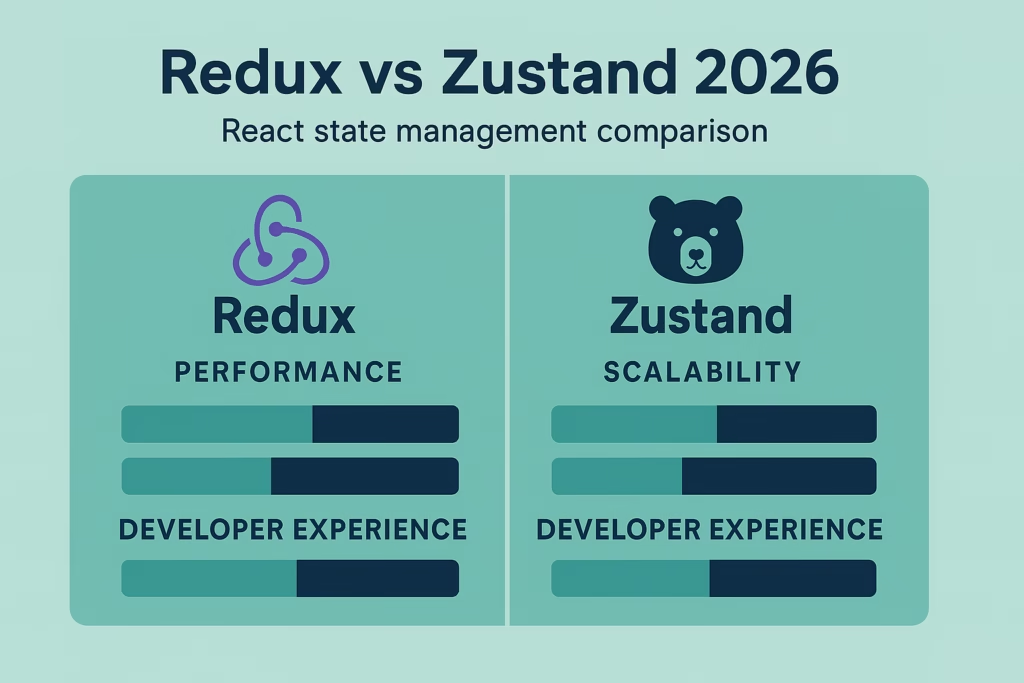
Developers today prioritize:
- Faster development
- Better performance
- Simpler APIs and intergration
- Less boilerplate code
- Improved maintainability and debugging
Zustand addresses many of these concerns, while Redux continues to dominate large-scale enterprise projects.
Which library is better for your specific application?
Let’s compare them.
1. Learning Curve
Redux
Although Redux Toolkit simplified Redux concept, developers still need to understand several concepts like:
- Store configuration
- Reducers
- Actions
- Middleware
- Slice function
We have to understand the above terminology with redux toolkit.
Zustand
Zustand is simple to learn .Developers can start quickly without learning above concepts. It’s API is straightforward and easy to understand.
For beginners and smaller teams, Zustand offers a much smoother learning experience.
2. Boilerplate Code
In Redux we have to setup the boilerplate code which is much amount of code however in redux toolkit this issue is not there but still require:
- Store setup
- Slice creation
- Provider configuration
- Reducers
Zustand reduce most of these setup and configurations.
A global store can often be created in just a few lines of code.
3. Scalability
Scalability is where redux have much better than Zustand
Large applications often require:
- Consistent state updates
- Predictable architecture
- Coding standards
Redux was designed to overcome these challenges.
Zustand can scale effectively, but in very large applications may require additional setup and configuration.
4. Performance
Performance is often a major factor when choosing a state management library.
Redux
Redux performs well when it combines with :
- Memoized selectors
- Optimized reducers and stores
- Component structure
Zustand
Zustand’s subscription-based architecture. it only updates the component for which state is changed. It remove unnecessary re-renders which improve the performance of the application.
5. Developer Experience
Developer experience has become important in modern frontend development.
Redux
Advantages:
- Standard architecture
- Strong community
Challenges:
- More setup required
Zustand
Advantages:
- Minimal API
- Easy integration
- Better performance
- Less code
6. Debugging and Tooling
Redux
It has one of the strongest debugging tools in web development.
Features include:
- Redux DevTools
- Time-travel debugging
- Action history
- State data flow
Zustand
It supports developer tools as well, but the ecosystem is not too much as Redux.
7. Community and Ecosystem
Redux
It is used by thousands of organizations worldwide. So, it’s had massive community and ecosystem.
Benefits include:
- Massive community support
- Massive learning resources
- Long-term stability
Zustand’s community continues to grow rapidly. So it’s had low community as of now.
Redux vs Zustand Comparison Table
| Feature | Redux | Zustand |
| Learning Curve | Medium | Easy |
| Boilerplate | Moderate | Minimal |
| Performance | Excellent | Excellent |
| Scalability | Excellent | Very Good |
| Debugging Tools | Excellent | Good |
| Developer Experience | Good | Excellent |
| Community Support | Excellent | Growing |
| Enterprise Adoption | High | Medium |
When Should You Use Redux?
Redux choose when :
- Many teams work on the same application
- Complex application architecture
- Advanced debugging is required
- Scalability consistency
Examples include:
- E-commerce platforms
- Banking applications
- Healthcare systems
- Enterprise dashboards
When Should You Use Zustand?
Zustand choose when:
- Rapid development is important
- Lightweight applications
- Performance of the applications
- Simplicity is preferred
- The application is small to medium-sized
- Team productivity is a priority
Examples include:
- SaaS products
- Startup applications
- Marketing dashboards
Frequently Asked Questions
Is Zustand replacing Redux in 2026?
No. Zustand is growing rapidly, but Redux remains widely used in enterprise React applications.
Which library is easier to learn?
Zustand is generally easier because it requires fewer concepts and less configuration.
Which library performs better?
Both perform extremely well. Zustand often achieves excellent performance with less configuration.
Is Redux still relevant in 2026?
Yes. Redux remains one of the most trusted and widely adopted state management solutions for large-scale applications.
Can Redux and Zustand be used together?
Technically yes, but most projects benefit from choosing one primary state management solution.
Which library should beginners choose?
Beginners typically find Zustand easier because of its simple API and minimal setup.
Is Redux Toolkit better than Zustand?
Redux Toolkit provides stronger architectural patterns and enterprise-level tooling. Zustand focuses on simplicity and developer productivity. The better choice depends on your project requirements.
Conclusion
The Redux vs Zustand libraries solve state management problems efficiently, but they have different approach to solve those problems.
Redux is preferable for large-scale enterprise applications that require structured architecture, and advanced debugging capabilities
Zustand, on the other hand is preferable for small to medium sized applications With minimal boilerplate, excellent performance, and easy onboarding.
The best state management library is the one that based on your project requirements ,long term goals , and application complexity. By understanding the capability of both redux and Zustand you can build react application that remain scalable in 2026 and beyond.