A good financial system structures the growth of the economy. It helps in mobilizing savings, allocating capital efficiently, and supporting businesses, industries, and individuals.
In this blog, we’ll explore the financial system, its components, financial markets, securities market, and debt market in a simple and easy-to-understand manner.
Table of Contents
- Introduction to the Financial System
- What is a Financial System?
- Components of the Financial System
- Financial Markets
- Financial Markets Explained
- Money Market
- Capital Market
- Securities Market
- Primary Market
- Secondary Market
- Debt Market
- Conclusion
- Frequently Asked Questions (FAQs)
What is a Financial System?
Every modern economy is based on a sound financial system which helps in economic growth by encouraging saving habits, mobilising savings from households and allocating savings into productive usage such as trade, commerce, manufacture etc.
A financial system is a set of institutional arrangements through which financial surpluses are mobilised from the units generating surplus income and transferring them to the others in need of them.
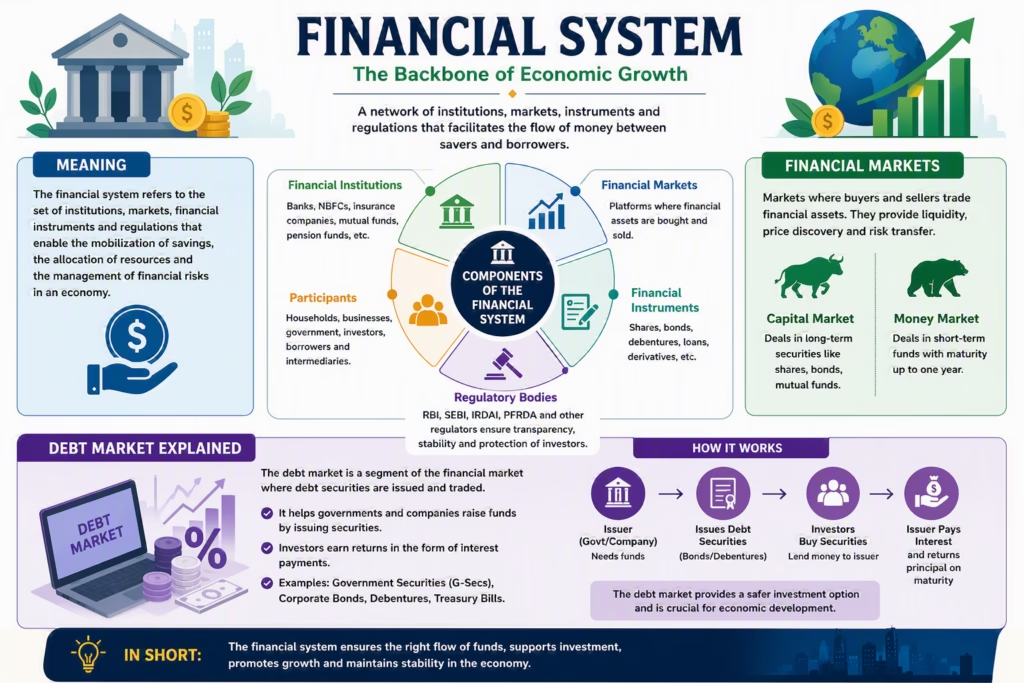
Components of the Financial System
Broadly, organisational structure of financial system includes various components i.e.
- Financial Markets
- Financial Products/Instruments
- Financial Market Participants/Intermediaries
Financial Markets:
Financial markets provide channels for allocation of savings to investment. These provide a variety of assets to savers as well as various forms in which the investors can raise funds and thereby decouple the acts of saving and investment.
The financial markets have two major components the money market and the capital market
- Money Market
It refers to the market where borrowers and lenders exchange short term funds to solve their liquidity needs. Money market instruments are generally financial claims that have low default risk, maturities under one year and high marketability.
- Capital Market
It is a market for financial investments that are direct or indirect claims to capital. It is wider than the securities market and embraces all forms of lending and borrowing. The capital market is a vital part of any financial system and is referred to as the barometer of the economy.
Securities Market
The Securities market refers to the markets for those financial instruments/claims/obligations that are commonly and readily transferable by sale.
The Securities market has two inter- dependent and inseparable segments, the new issues (primary) market and the stock (secondary) market.
- Primary Market
The market wherein resources are mobilised by companies through issue of new securities is called the primary market. The primary market provides the channel for sale of new securities.
- Secondary Market
The market enables those who hold securities to adjust their holdings in response to changes in their assessment of risk and return.
Debt Market
Debt markets are markets for issuance, trading and settlement in fixed income securities of various types and features. Fixed income securities can be issued by almost and legal entity like central and state governments, public bodies, statutory corporations, banks and institutions and corporate bodies.
Conclusion
The financial system plays a very important role in Indian economy as it works as a bridge between savers and investments. All the financial market products help in supporting and long-term growth of funds and ultimately the individual’s investment. Businessman policy makers and others should have complete and good knowledge of the financial products and system for improved decision making.
Frequently Asked Questions (FAQs)
1. What is a financial system?
A financial system is a network of financial institutions, markets, instruments, and intermediaries that facilitates the flow of funds between savers and borrowers, supporting economic growth and development.
2. What are the main components of a financial system?
The three primary components of a financial system are:
- Financial Markets
- Financial Products or Instruments
- Financial Market Participants and Intermediaries
3. What is the difference between the money market and the capital market?
The money market deals with short-term financial instruments with maturities of less than one year, while the capital market focuses on long-term investments such as stocks and bonds.
4. What is the primary market?
The primary market is where companies issue new securities to investors to raise capital through offerings such as Initial Public Offerings (IPOs) and Follow-on Public Offers (FPOs).
5. What is the secondary market?
The secondary market is where existing securities are traded among investors through stock exchanges, providing liquidity and enabling price discovery.
6. What is the debt market? The debt market is a financial market where governments, corporations, and financial institutions issue and trade fixed-income securities like bonds, debentures, and treasury bills.