
The React UI libraries 2026 landscape is evolving rapidly, offering developers powerful and best tools to build fast, scalable, optimize and visually stunning applications. Choosing the right React UI libraries in 2026 can significantly improve the performance of the application, development speed, and user experience.
In this guide, we explore the powerful libraries, their features, comparisons, and when to use them.
📌 Table of Contents
- What are React UI libraries
- Why use React UI libraries
- Top React UI libraries 2026
- Comparison of libraries
- Best practices
What Are React UI Libraries?
React UI libraries are pre-built component collections that help developers create user interfaces quickly. With use of the react UI Libraries improves the developer productivity and user experience.
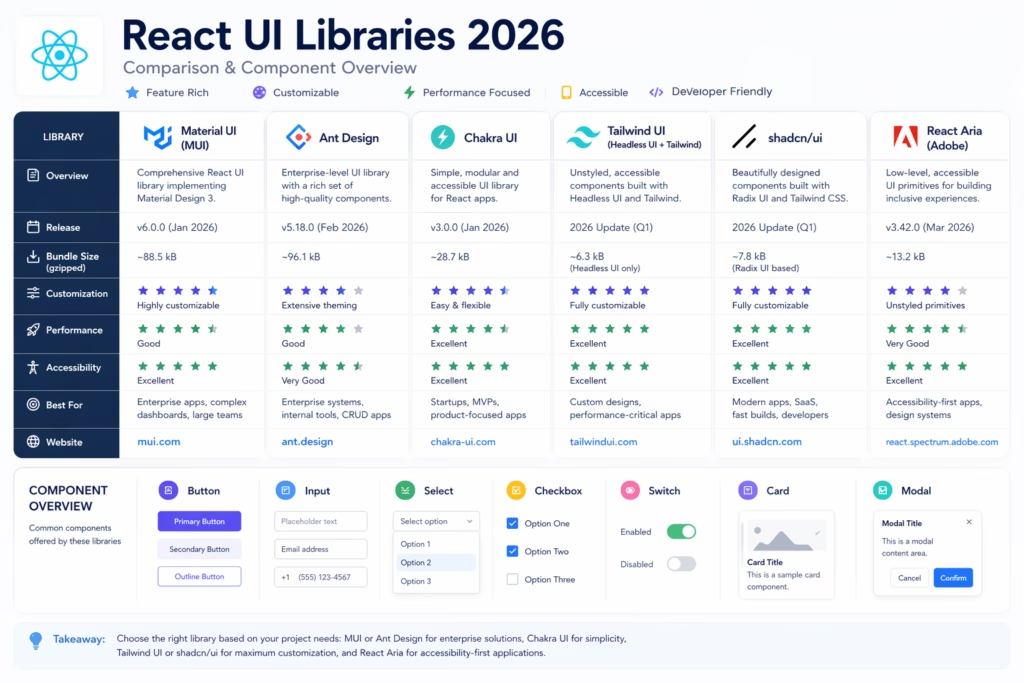
Examples of Components:
- Buttons
- Forms
- Modals
- Navigation bars
- Grid
- Chart
🚀 Why Use React UI Libraries 2026?
Using React UI libraries 2026 offers several benefits:
- Faster development
- Better User experience
- Consistent design
- Responsive UI
- Reduced code effort
🔥 Top React UI Libraries 2026
1. Material UI (MUI)
Best for: Enterprise applications
- Google Material Design
- Large component library
- Strong community support
- Simple Use
2. Tailwind CSS + Headless UI
Best for: Custom design
- Utility-first styling
- Fully customizable
- Lightweight
- Prebuilt classes and components
3. Ant Design
Best for: Business dashboards
- Rich components
- Clean UI
- Enterprise-ready
- Community support
4. Chakra UI
Best for: Accessibility
- Simple API
- Built-in accessibility
- Developer-friendly
5. ShadCN UI
Best for: Modern apps
- Built on Tailwind
- Highly customizable
- Clean design
- Developer friendly
6. Bootstrap React
Best for: Quick projects
- Easy to use
- Familiar components
- Fast setup
- Better UI experience
7. Mantine
Best for: Full-featured apps
- Hooks + components
- Dark mode support
- Modern UI
- Enterprise applications
📊 React UI Libraries 2026 Comparison
| Library | Best For | Customization | Performance |
| Material UI | Enterprise apps | Medium | High |
| Tailwind UI | Custom design | High | High |
| Ant Design | Dashboards | Medium | High |
| Chakra UI | Accessibility | Medium | High |
| ShadCN UI | Modern apps | High | High |
| Bootstrap | Quick projects | Low | Medium |
| Mantine | Full apps | High | High |
🧠 How to Choose React UI Libraries 2026
Choose based on your needs:
For Beginners:
- Bootstrap
- Chakra UI
For Custom UI:
- Tailwind + Headless UI
- ShadCN UI
For Enterprise:
- Material UI
- Ant Design
⚡ Best Practices
- Avoid overloading libraries
- Maintain design consistency
- Optimize bundle size
- Use tree-shaking
- Avoid excessive use of the libraries
⚠️ Challenges
- Large bundle size
- Learning curve
- Over-dependence
- Heavy web applications
📈 Future of React UI Libraries
The React UI libraries 2026 ecosystem is moving toward:
- Headless components
- AI-assisted UI
- Better performance optimization
✅ Conclusion
Choosing the right React UI libraries 2026 can transform your development workflow. Whether you need speed, customization, or scalability, there’s a library for every use case. React UI libraries can be more useful in enterprise level applications. With use of the libraries it will improve the productivity of the developer and better user experience.
❓ FAQs
What are React UI libraries?
Pre-built UI components for React apps.
Which is best in 2026?
Material UI, Chakra UI, and Tailwind-based solutions.
Are UI libraries necessary?
They are not required but highly useful.
Which is best for beginners?
Chakra UI and Bootstrap.
🔥 Final Thoughts
The React UI libraries 2026 ecosystem is more powerful than ever. Start using the right tools to build modern, scalable applications efficiently. Only thing to remember that we should choose libraries according to the requirement and complexity of the application so that application will be lightweighted and better UI experience . 🚀